Introduction
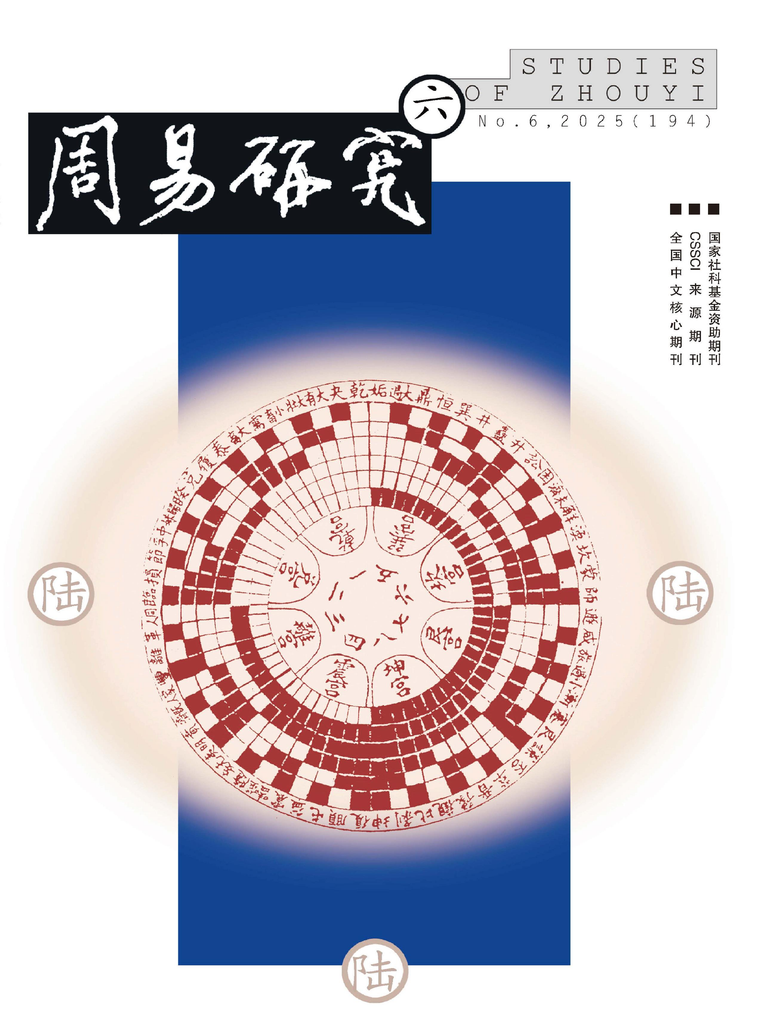
The Chinese academic journal Zhouyi Yanjiu 《周易研究》 (Studies of Zhouyi) has been published since 1988. It is one of the principal Chinese journals devoted to research on the Zhouyi, its commentaries, divination methods, and related philosophical traditions. Over nearly four decades, it has published articles on the interpretation of individual hexagram statements, the history of Yijing scholarship, excavated manuscripts, paleography, image-and-number studies (象數易學), philosophical interpretation (義理易學), and many other subjects.
The journal is available through the National Center for Philosophy and Social Sciences Documentation (NCPSSD), which offers an English-language interface for browsing its issues. The articles themselves are predominantly in Chinese, but English-language selections have appeared intermittently since 2003. In 2024, a new English-language journal was published by Peter Lang. The history and availability of these English publications are discussed below.
History and editorial staff
Zhouyi Yanjiu was founded in 1988 by Liu Dajun 劉大鈞, professor of Chinese philosophy at Shandong University and a prominent scholar of the Yijing. According to the journal’s official introduction, Liu initially financed the publication himself. At the time, it was the only publicly distributed specialist journal devoted to Yijing studies in mainland China. It originally appeared quarterly, changing to a bimonthly schedule in 2002. Today, the journal is jointly sponsored by Shandong University in Jinan and the Chinese Society of Zhouyi Studies (中國周易學會), with its editorial work associated with Shandong University’s Center for Zhouyi and Ancient Chinese Philosophy (山東大學易學與中國古代哲學研究中心).
Liu remains listed as editor-in-chief, while Li Shangxin 李尚信, professor of Chinese philosophy and executive deputy director of the research center, serves as director of the editorial office. In an interview published by Shandong University in October 2024, Li discussed the journal’s editorial procedures, academic priorities, and its role in encouraging younger scholars. Submissions undergo four stages of evaluation: an initial editorial assessment, external double-anonymous peer review, collective editorial review, and final approval. Li explains that external reviewers have considerable authority in the selection process:
外审没通过的稿件绝不直接录用。
“A manuscript that fails external review is never accepted directly.”
Li goes on to explain that the journal does not impose restrictions based on an author’s academic rank or qualifications, and that its editors regularly help younger scholars improve their papers through successive revisions. His interview includes a detailed account of the editorial work involved in preparing a submitted article for publication, including the problems identified during review and the changes requested from the author.
The subjects covered by Zhouyi Yanjiu reflect the different branches of Chinese Yijing scholarship. Besides research on the received Zhouyi, the journal publishes studies on the history of Yijing interpretation, excavated texts, divination, calendrical systems, cosmology, and the relationship between the Yijing and Chinese philosophy. Its scope has also expanded to include the contemporary interpretation of traditional Chinese thought, comparisons between Chinese and Western philosophy, and the international reception of the Yijing. Some of its current editorial priorities concern the contemporary development of Chinese philosophy and the relationship between traditional Chinese thought and modern society. Not every issue therefore focuses on historical or philological questions, but the accumulated material in these fields is substantial.
The journal is recognized as a source journal by the Chinese Social Sciences Citation Index (CSSCI) and has received support from China’s National Social Science Fund. Further information about its history, objectives, and current editorial structure can be found in the official journal introduction at Shandong University.
Some noteworthy articles
Selecting a few articles from nearly four decades of publication is inevitably subjective. Rather than concentrating on one particular subject, the following selection illustrates the different approaches represented in the journal. Some studies reconsider the meaning of familiar passages in the received Zhouyi, while others examine commentarial traditions, calendrical systems, the history of Yijing diagrams, or the interpretation of archaeological discoveries. The selection is intended to show the range of material available, not to establish a ranking of the journal’s most influential articles.
All the Chinese articles discussed below can be located in the NCPSSD journal archive using their publication year, issue number, and title. The archive provides PDF downloads of the journal’s articles, although downloading requires a registered account. Where available, links to the complete texts republished by Shandong University are also provided.
A different interpretation of “地勢坤”
Huang Jie 黃杰, associate professor of palaeography and early Chinese texts at Shandong University, and Zheng Yining 鄭怡寧, a doctoral researcher at Tsinghua University’s Research and Conservation Center for Excavated Texts, examine one of the best-known passages in the Yijing in their article Zhouyi “di shi kun” jiegu 《〈周易〉「地勢坤」解詁》 (Zhouyi Yanjiu, 2025, no. 2, pp. 24–31).
The expression “天行健,君子以自強不息” from the Great Image commentary to Qian 乾, together with its counterpart “地勢坤,君子以厚德載物” from Kun 坤, has become particularly familiar in China. Huang and Zheng question whether the conventional punctuation (天行健,… – “Heaven’s movement is strong and vigorous…” & 地勢坤,… – “The earth’s configuration is substantial and yielding…”) and interpretation of these passages are correct. Following earlier scholarship, they propose that the opening expressions should be punctuated as follows:
天行,健。
“Heaven moves; Qian.”地勢,坤。
“The earth is established; Kun.”
The difference is not merely a matter of punctuation. In their reading, 健 is understood as a loan for 乾, while 坤 identifies the second hexagram. Huang and Zheng further propose that 勢 should be read as 設, referring to the earth being set out or established. Their argument draws on parallels in early Chinese literature in which 行 and 設 occur together, and on the structure of other passages in the Great Image commentary. The authors also suggest that the two expressions may refer to the establishment of heaven and earth as the conditions necessary for the generation of the myriad things.
The article is interesting because it demonstrates how the conventional understanding of a familiar passage can be reconsidered through textual analysis. Rather than simply proposing another philosophical interpretation, the authors question the punctuation and reading of the underlying text and examine the consequences for its meaning.
Read Huang Jie and Zheng Yining’s article.
The meaning of “盥而不薦” in hexagram Guan 觀
In Zhouyi “Guan guan er bu jian” yu Lunyu “Di zi ji guan er wang” tongshi 《〈周易〉「觀盥而不薦」與〈論語〉「禘自既灌而往」通釋》 (Zhouyi Yanjiu, 2024, no. 5), Qin Jie 秦潔, a researcher at Shandong University’s Center for Zhouyi and Ancient Chinese Philosophy, examines the relationship between the hexagram statement of Guan 觀 and a passage in the Lunyu 《論語》. Both passages refer to sacrificial rituals, and both have been interpreted in different ways by commentators throughout Chinese history.
The statement of Guan reads “觀,盥而不薦,有孚顒若”, while Lunyu 3.11 records Confucius’ remark concerning the di 禘 sacrifice: “禘自既灌而往者,吾不欲觀之矣”. Qin examines the relationship between 盥, 灌, and 薦, paying particular attention to the different stages of the ritual and their significance. She argues that the emphasis falls on the manifestation of sincerity and moral character during the earlier ritual action, rather than on the material offerings presented afterward.
Qin’s interpretation connects the wording of the hexagram statement with early Chinese ritual practice and Confucian thought. It also raises a question concerning the relationship between the Zhouyi and its later philosophical interpretations. Although the wording may have originated in a context of sacrificial practice, its interpretation came to involve ideas about moral cultivation, sincerity, and the proper performance of ritual. The article provides a useful example of how the history of a particular expression can be investigated by comparing the Zhouyi with related early sources.
A new interpretation of hexagram Huan 渙
Mou Xiaolin 牟曉琳, a doctoral researcher in Yijing philosophy and history at Shandong University, and Li Shangxin 李尚信 propose a new interpretation of hexagram 59, Huan 渙, in Huanran wu san qixiang qing: Zhouyi gujing Huan gua xinjie 《渙然污散氣象清——〈周易〉古經渙卦新解》 (Zhouyi Yanjiu, 2024, no. 6, pp. 28–35).
Earlier commentators already recognized different implications of dispersal. Cheng Yi 程頤 (1033–1107), in his Yichuan Yizhuan 《伊川易傳》, emphasized the restoration of social unity: “能收合人心,則散可聚也” (“If people’s hearts can be brought together, what has been dispersed can be reunited”). Guo Yong 郭雍 (1091–1187), however, distinguished two meanings in his Yishuo 《易說》:
天下離散為渙,而散天下之難亦為渙。
“The separation and dispersal of the realm is Huan, but dispersing the troubles of the realm is also Huan.”
The idea that dispersal itself can be beneficial is therefore not new. What Mou and Li contribute is a more specific political interpretation in which the six lines concern the removal of obstacles to good government, including selfish interests, factionalism, and failures of leadership. For their interpretation of line 4, 渙其群, they draw on the Mawangdui silk manuscript Miaohe 《繆和》, which connects the dispersal of groups with the elimination of political factions.
Their interpretation of line 5, 渙汗其大號,渙王居,無咎, is particularly unconventional. Whereas traditional commentators generally interpret the image of perspiration as representing royal commands spreading throughout the kingdom, Mou and Li understand it as an image of excessive and arbitrary commands. They interpret 王居 as the opposite problem, political inactivity. On their reading, the line concerns eliminating both excessive intervention and failure to act. Their article is worth reading for these specific reinterpretations, which can be compared with earlier commentaries and evaluated against the wording of the original line statements.
Read Mou Xiaolin and Li Shangxin’s article.
How Wang Bi interpreted changing lines
Wang Bi 王弼 (226–249) is often associated with the movement away from the elaborate image-and-number interpretations of Han Yijing scholarship toward a more philosophical approach. However, his commentaries also contain methods for interpreting the structure and relationships of the lines within a hexagram. Ji Lei 季磊, a postdoctoral researcher at the Institute of Philosophy of the Chinese Academy of Social Sciences, examines these methods in Wanglai dongjing yu shishi er bian: Wang Bi “yaobian shuo” xinlun 《往來動靜與適時而變——王弼「爻變說」新論》 (Zhouyi Yanjiu, 2026, no. 4).
Ji distinguishes two aspects of Wang Bi’s theory of line change. The first concerns the relationships and movement tendencies of lines within a hexagram, expressed through terms such as 往, 來, 進, and 退. The second concerns the changing significance of a line according to the particular circumstances represented by its hexagram. Ji argues that Wang Bi’s approach differs from Han theories of hexagram transformation because it does not necessarily involve changing one hexagram into another. Instead, Wang Bi is concerned with how relationships between lines and changing circumstances affect the interpretation of the line statements.
The article is particularly useful for understanding the actual procedures behind Wang Bi’s interpretations. The distinction between image-and-number scholarship and philosophical interpretation is often presented too sharply, as though the latter simply abandoned the technical features of the Zhouyi. Ji’s study shows that Wang Bi’s approach was more systematic than this distinction might suggest.
Hexagrams and the Chinese calendar
The relationship between the hexagrams and the Chinese calendar became an important part of Han-dynasty Yijing scholarship, particularly through the development of guaqi 卦氣 theories. These systems associated hexagrams and individual lines with seasonal cycles, solar terms, and the passage of time. Huang Lixing 黃黎星, professor at Fujian Normal University, examines some of the problems involved in reconstructing these systems in Yu Yue “Guaqi zhiri kao”, “Guaqi xu kao” suo she lifa wenti zhi bianxi 《俞樾〈卦氣直日考〉〈卦氣續考〉所涉曆法問題之辨析》 (Zhouyi Yanjiu, 2024, no. 4).
Huang reexamines two studies by the Qing scholar Yu Yue 俞樾 (1821–1907), who proposed changes to the traditional assignment of the four principal hexagrams to seasonal divisions. Yu’s reconstruction attempted to resolve certain inconsistencies in the calendrical arrangement, but Huang questions whether these changes are supported by the historical evidence. He also discusses Yu’s interpretation of Jing Fang’s 京房 system and the relationship between hexagram assignments and astronomical calculations.
An important aspect of Huang’s discussion is the distinction between using calendrical values to construct a Yijing-related system and using astronomical observations to determine the calendar itself. The two approaches may produce similar numerical arrangements, but they do not necessarily reflect the same reasoning. In particular, Huang distinguishes Jing Fang’s attempt to make hexagram assignments correspond with calendrical calculations from the astronomically oriented approach of the Tang monk and astronomer Yixing 一行. The article is especially relevant to the history of Han Yijing scholarship and to the relationship between hexagrams, calendrical cycles, and correlative classifications.
Liu Mu’s Hetu and Luoshu diagrams
Zhang Kebin 張克賓, professor at Shandong University’s Center for Zhouyi and Ancient Chinese Philosophy, examines the numerical system developed by Liu Mu 劉牧 ((fl. first half of the 11th century) in Lun Liu Mu Hetu Luoshu shuo de jiagou yu yiyun 《論劉牧〈河圖〉〈洛書〉說的架構與意蘊》 (Zhouyi Yanjiu, 2024, no. 4, pp. 5–13). Zhang identifies three interconnected series of diagrams in Liu Mu’s Yishu gouyin tu 《易數鉤隱圖》: the Hetu 河圖, the Luoshu 洛書, and the Taiji 太極 diagrams. Although these series overlap considerably, they express a common attempt to explain how the trigrams emerge through the numerical progression from Taiji to the Two Modes, Four Images, and Eight Trigrams. Central to Liu Mu’s system is the number five (天五), which acts as the driving force behind numerical transformation. Zhang also examines Liu Mu’s distinction between the Hetu as representing images (象) and the Luoshu as representing the formation of material things (形), and his explanation of the numbers used in yarrow-stalk divination.
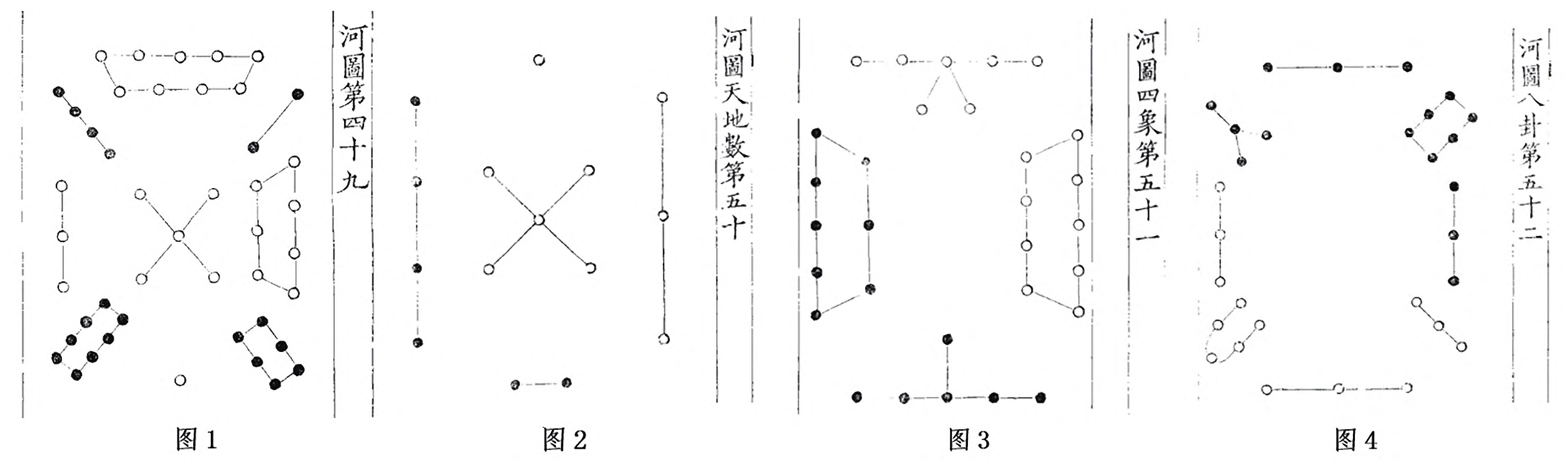
Zhang considers Liu Mu’s approach an important innovation in Song-dynasty Yijing scholarship because it attempts to explain the origin of the trigrams through numerical principles rather than taking the trigram figures as a starting point. However, he also identifies inconsistencies, particularly Liu Mu’s inability to demonstrate convincingly how the numbers actually generate the individual trigram figures. Interestingly, Liu Mu identified the nine-number arrangement as the Hetu and the ten-number Five Phases arrangement as the Luoshu, the reverse of the identification familiar today.
Although Zhang attributes the creation of the black-and-white dot diagrams to Liu Mu, he does not systematically investigate their historical origins. Readers interested in that question can consult Guo Yu 郭彧, Bei Song liang Liu Mu zai kao 《北宋兩劉牧再考》 (Zhouyi Yanjiu, 2006, no. 1), who questions whether the diagrams in the transmitted Yishu gouyin tu were actually Liu Mu’s work or later additions by his disciples. Another useful study is Bai Fahong 白發紅, Lun Luoshu tushi dui Hongfan quanshi de yingxiang 《論洛書圖式對〈洪範〉詮釋的影響》 (Zhouyi Yanjiu, 2022, no. 2), which examines the emergence of the numerical Luoshu diagram and its relationship to earlier traditions. These articles complement Zhang’s investigation by addressing the history of the diagrams themselves.
How old are the familiar trigram arrangements?
Zhang Kebin returns to the history of trigram arrangements in another article, Cong chutu wenxian kaolun “Shuogua zhuan” suo zai bagua cixu yu bagua fangwei zhu wenti 《從出土文獻考論〈說卦傳〉所載八卦次序與八卦方位諸問題》 (Zhouyi Yanjiu, 2026, no. 5, pp. 5–16). Here he examines the sequences and directional arrangements of the eight trigrams recorded in the Shuogua 《說卦》, comparing them with evidence from excavated manuscripts, particularly the Mawangdui silk Zhouyi and the Tsinghua bamboo manuscripts.
Zhang argues that a sequence in which the parents are followed by the youngest, middle, and eldest children circulated in early China, differing from the more familiar sequence of parents followed by the eldest, middle, and youngest children. He also questions the widespread assumption that the passage beginning “天地定位” originally referred to the arrangement later known as the Earlier Heaven (先天) trigram circle. In Zhang’s interpretation, the passage describes relationships between pairs of trigrams but does not specify their positions around a circle. The famous Earlier Heaven arrangement was developed during the Song dynasty and was subsequently associated with the legendary Fuxi 伏羲. Zhang reverses the usual explanation of the relationship between the diagram and the text:
伏羲先天八卦方位圖參照「天地定位」章而作,而非是「天地定位」章原有之蘊。
“The Fuxi Earlier Heaven trigram diagram was constructed with reference to the ‘Heaven and Earth establish their positions’ passage; it was not something already contained in that passage.”
The question of the historical origins of the two trigram circles was also examined in my 2021 YiTube video The history of trigram circles: facts, sources and their interpretation. The video discusses the traditional attribution of the Earlier Heaven circle to Fuxi and the Later Heaven (後天) circle to King Wen, and examines the historical evidence for these claims. It argues that the Earlier Heaven arrangement cannot be demonstrated before the Song dynasty, whereas the arrangement later called the Later Heaven circle has much earlier roots. Among the sources discussed is the Tsinghua Shifa 《筮法》, whose trigram arrangement provides evidence for an early directional system.
Zhang’s conclusions broadly agree with this historical distinction, although there are two interesting differences. First, Zhang points out that the Shifa arrangement is not identical to the familiar Later Heaven circle: the positions of Kan 坎 and Li 離 are reversed. This is an important qualification when using the manuscript as evidence for the antiquity of the Later Heaven arrangement. Second, the video follows the traditional association of the Earlier Heaven diagram with the Daoist figure Chen Tuan 陳摶, whereas Zhang questions the evidence for this attribution. He argues that the specific sequence and diagrammatic system associated with the Earlier Heaven arrangement should instead be regarded as a creation of Shao Yong 邵雍 (1012–1077).
The difference between attributing a diagram to Chen Tuan and identifying Shao Yong as its creator concerns the distinction between a traditional account of transmission and the earliest evidence for the diagram’s existence. My video also examines a supposedly Western Han diagram presented as evidence for the antiquity of the Earlier Heaven arrangement. The illustration was traced to a thirteenth-century commentary by Hu Yigui 胡一桂, where it is connected with the Cantong qi 《參同契》 rather than a demonstrably Han-dynasty trigram circle.
Zhang’s article is particularly interesting because it approaches the familiar trigram diagrams through the history of the Shuogua, transmitted Yijing scholarship, and excavated manuscripts. The comparison with the earlier video also shows that agreement about the relatively late appearance of the Earlier Heaven arrangement does not necessarily mean agreement about every detail of its historical development.
Watch The history of trigram circles: facts, sources and their interpretation.
The end of numerical-hexagram research?
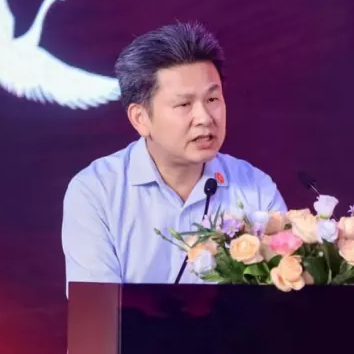
An example of a more contentious contribution is Ding Sixin’s 丁四新 Shuzi gua yanjiu de jieduan, gongxian ji qi zhongjie 《數字卦研究的階段、貢獻及其終結》 (Zhouyi Yanjiu, 2018, no. 5). Ding, professor of philosophy at Tsinghua University, reviews the history of research on numerical configurations found on oracle bones, bronze inscriptions, and excavated manuscripts. These configurations have played an important role in modern discussions of the origins of the hexagram figures.
Ding acknowledges the contributions of scholars such as Zhang Zhenglang 張政烺 and Li Xueqin 李學勤, whose work helped establish the connection between previously unexplained numerical inscriptions and early divination. However, he argues that the term “numerical hexagram” (數字卦) has become problematic. The category, in his view, is insufficiently precise and has encouraged researchers to treat certain materials as a distinct phenomenon when they should be examined within the wider history of early Chinese divination.
Ding divides the history of numerical-hexagram research into four stages, from initial speculation to discovery, criticism, and what he regards as the resolution of its central problems. His proposed conclusion is that research organized around the concept of “numerical hexagrams” should come to an end. He is not suggesting that the excavated numerical configurations should no longer be studied. His objection concerns the terminology and conceptual framework used to classify them, and he proposes that the relevant materials should instead be investigated as part of the broader history of early Chinese divination and the origins of hexagram figures.
The article raises a methodological question that extends beyond the study of numerical hexagrams. When a scholarly category has helped identify and explain new evidence, should it continue to be used if subsequent discoveries suggest that the original classification was inadequate? Ding’s argument is open to debate, particularly because the interpretation of numerical divination materials remains an active field of research.
How Western Yijing scholarship has changed
The journal also pays attention to Yijing research outside China. An interesting example is 1980–2020 nian Yingyu xuejie Yixue fanshi de zhuanbian: Cong “zhihui zhi shu” dao “lishi yujing zhi shu” 《1980—2020年英語學界易學範式的轉變——從「智慧之書」到「歷史語境之書」》 (Zhouyi Yanjiu, 2025, no. 6), by Wang Jiabao 王嘉寶, assistant professor at Beijing Normal–Hong Kong Baptist University, and Han Ziqi 韓子奇, professor at Beijing Normal University, whose research focuses on Yijing studies in an international context.
Wang and Han examine the changing approaches to the Yijing in English-language scholarship between 1980 and 2020. They distinguish between an earlier approach that treated the Yijing primarily as a philosophical or spiritual “book of wisdom”, strongly influenced by the Wilhelm–Baynes translation, and historically oriented research that pays greater attention to the circumstances in which the Zhouyi and its commentaries were composed, transmitted, and interpreted. The authors discuss the contributions of Edward L. Shaughnessy 夏含夷, Kidder Smith 蘇德愷, and Richard J. Smith 司馬富, tracing developments in research on early divination, the historical contexts of Song-dynasty commentaries, and the reception of the Yijing across different cultures.
The authors’ interpretation is particularly interesting because it presents a Chinese academic assessment of Western Yijing scholarship. Their distinction between a “book of wisdom” and a “book of historical context” is also open to further discussion. Historical and philosophical approaches are not necessarily mutually exclusive, and not all Western scholarship fits neatly into either category. Nevertheless, the article identifies developments that have had a considerable influence on how the Yijing is studied today.
An additional detail is that an expanded English-language version of the study appears in Contemporary Interpretations and Readings of the Yijing, edited by Geir Sigurðsson and Hon Tze-ki, published by Springer. The Chinese article notes that the English version develops the argument further and was adapted for an English-speaking academic audience.
Read Wang Jiabao and Han Ziqi’s article.
The English editions of Zhouyi Studies
English-language editions associated with Zhouyi Yanjiu began appearing in 2003. According to an announcement from Shandong University, the first Chinese-English bilingual edition was officially published on 18 April 2003. The original plan was to publish an annual supplement containing selected articles from the previous year’s Chinese issues, together with contributions written directly in English by Chinese and international scholars.
Zhang Wenzhi 張文智, professor and deputy director of Shandong University’s Center for Zhouyi and Ancient Chinese Philosophy, played an important role in establishing the English edition. Zhang studied English literature before specializing in Chinese philosophy and Yijing scholarship, and he was responsible for much of the translation work. In a later interview, he explained that the English editions contained both translated Chinese articles and original contributions from international researchers, including Chung-ying Cheng 成中英, Richard J. Smith 司馬富, Kidder Smith 蘇德愷, and Dennis C. H. Cheng 鄭吉雄. Zhang also translated studies by Liu Dajun 劉大鈞, Li Xueqin 李學勤, Tang Yijie 湯一介, Guo Qiyong 郭齊勇, and other Chinese scholars.
Although an annual publication was originally intended, the English editions appeared irregularly. Shandong University reports that ten English-language selections were published before the establishment of the new Peter Lang edition in 2024.
Where are the older English editions?
The older editions can partly be traced through Shandong University’s English-language journal archive. Unfortunately, this is not a complete collection of downloadable volumes. Most entries provide tables of contents rather than PDFs of the entire issues.
The archive includes Zhouyi Studies (English Version), vol. 3, no. 1 (2005), which contains articles on Confucian philosophy, the Chu bamboo-slip Zhouyi, and the history of Yijing interpretation. Its contributors include Guo Qiyong 郭齊勇, Lin Zhongjun 林忠軍, Chung-ying Cheng 成中英, and David R. Knechtges 康達維. View the contents of the 2005 edition.
The following edition, vol. 4, no. 1 (2006), includes Liu Dajun’s “On the Origin and Development of the Silk Manuscript of the Zhouyi”, Stephen Field’s “Some Observation on Milfoil Divination”, and contributions on Chinese philosophy and comparative studies. View the contents of the 2006 edition.
Volume 5, no. 1 (2007–2008) contains studies on the transmission of the Zhouyi in pre-imperial China, excavated divination manuscripts, Northern Song Yijing scholarship, and comparative philosophy. Its contents include Liao Qun’s 廖群 “Three Kinds of Yi and the Transmission of the Zhouyi in the Pre-Qin Period” and Wu Yong’s 吳勇 “Viewing the Six-digit Hexagram by the Excavated Bamboo Slips Manuscripts of Yi”. View the contents of the 2007–2008 edition.
The university’s archive also contains entries labelled Studies of Zhouyi for 2006–2012, but these should not automatically be confused with the separate English-language editions. Some are English tables of contents or summaries of the regular Chinese journal. A complete online archive of all ten earlier English selections has not been located, and obtaining particular volumes may require consulting a library collection.
Some individual articles are easier to obtain. Shandong University’s Selected Papers collection contains 42 entries across two pages, including articles by Chinese and international researchers. Among them is Richard J. Smith’s “The Book of Changes as a Mirror of the Mind”, which can be read directly on the university’s website. The collection also contains studies by Bent Nielsen, Wu Yong, Denis Mair, and Andrea Bréard, although it does not establish that every article originally appeared in one of the ten English editions.
The earlier editions certainly existed, and their contents can partly be reconstructed from the surviving records, but their present online availability is much more limited than that of the newer publication.
The new English journal published by Peter Lang
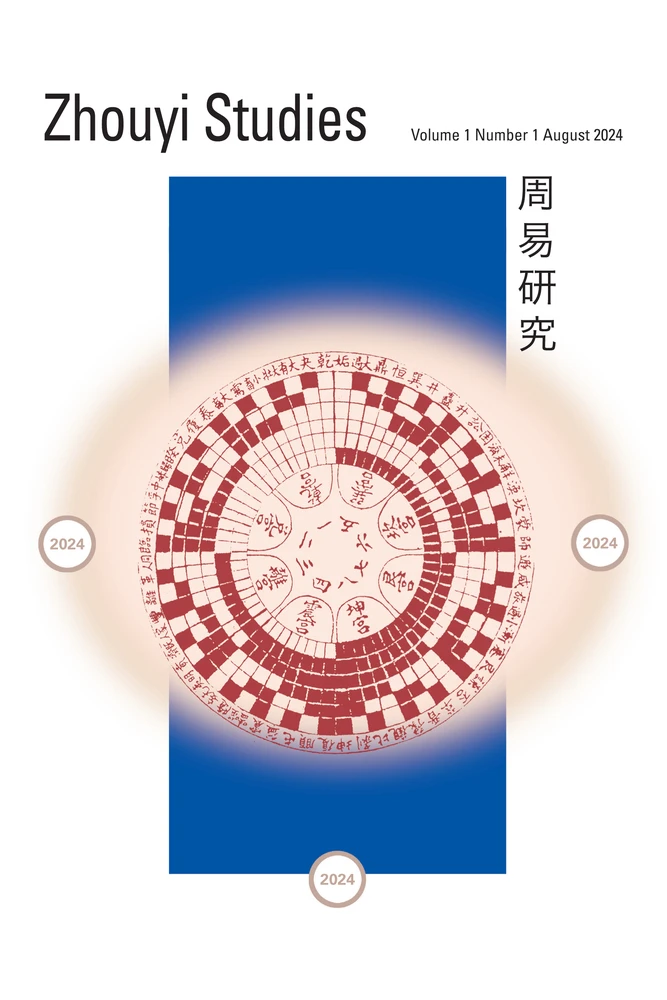
In 2024, the academic publisher Peter Lang published the first issue of a new English-language journal, Zhouyi Studies (ISSN 2993-0782). Volume 1, Issue 1 contains nine research articles and a short concluding entry, covering textual history, Han-dynasty Yijing scholarship, Daoist interpretations, mathematics, and comparative philosophy. Unlike the older editions, the research articles are available as open-access PDFs through the publisher’s website.
Browse Zhouyi Studies, Volume 1, Issue 1 (2024), at Peter Lang.
The first issue includes Liu Baozhen’s 劉保貞 “Further Discussion on the Issue of the Ancient and the New Texts of the Zhouyi”, which examines the historical classification of ancient-text and new-text traditions in Yijing scholarship. Wang Xiaoyi 王曉毅 discusses the relationship between image-and-number interpretation and the philosophical approach of Han Kangbo 韓康伯 in “Assimilation of the Image-numerology in Han Kangbo’s Yi Learning and Its Significance”. Sun Yiping 孫亦平 examines the reception of the Yijing in Daoism through the Zhouyi cantong qi 《周易參同契》, while Scott Davis discusses structural approaches to ancient Chinese texts and culture.
Andrea Bréard’s “Divination with Hexagrams as Combinatorial Practice” is particularly interesting because it examines the use of solid and broken lines in mathematical investigations by the Qing-dynasty scholar Wang Lai 汪萊 (1768–1813). Bréard shows that configurations resembling hexagram structures could be used to investigate combinatorial problems without being restricted to conventional six-line figures or divination.
Several of the articles published in the 2024 Peter Lang issue had already circulated through Shandong University’s Selected Papers website years earlier. Bréard’s article, for example, is listed there with a date in 2013. The new publication therefore includes material with an earlier history of circulation, rather than consisting exclusively of newly written contributions.
Conclusion
The selection of articles discussed here gives only a limited impression of the material published in Zhouyi Yanjiu. Besides studies of the received text, its issues contain research on Han and later commentarial traditions, textual variants, excavated manuscripts, divination procedures, Chinese philosophy, and the reception of the Yijing outside China. The journal also provides a record of how interpretations and scholarly approaches have changed as new sources have become available. For research on the Zhouyi and the history of Yijing scholarship, it is worth consulting regularly.
Reader discussion
Comments and exchanges on this article are preserved below.