
Lately, I’ve been getting quite a few questions about AI. People want to know what I think of it and whether I use it myself. I thought my position on AI was already fairly clear, but apparently it isn’t. So perhaps it’s time to explain why I consider AI so important.
I’m a great believer in AI. In fact, I think AI is one of the most useful tools available to anyone who consults the Yijing. I use it constantly, not only in my own consultations but also in my research into the Zhouyi, its history, and its language.
I know that not everybody shares my enthusiasm. Some people are rather sceptical about AI, and I can understand their reservations. But personally, I think that without AI, studying and consulting the Yijing becomes unnecessarily difficult.
Let me explain why.
Understanding what the Zhouyi actually tells us
When we consult the Yijing, we encounter a text that is more than two thousand years old. Its language can be difficult, its expressions are sometimes obscure, and the meaning of a particular passage is not always immediately apparent.
So how do we approach it?
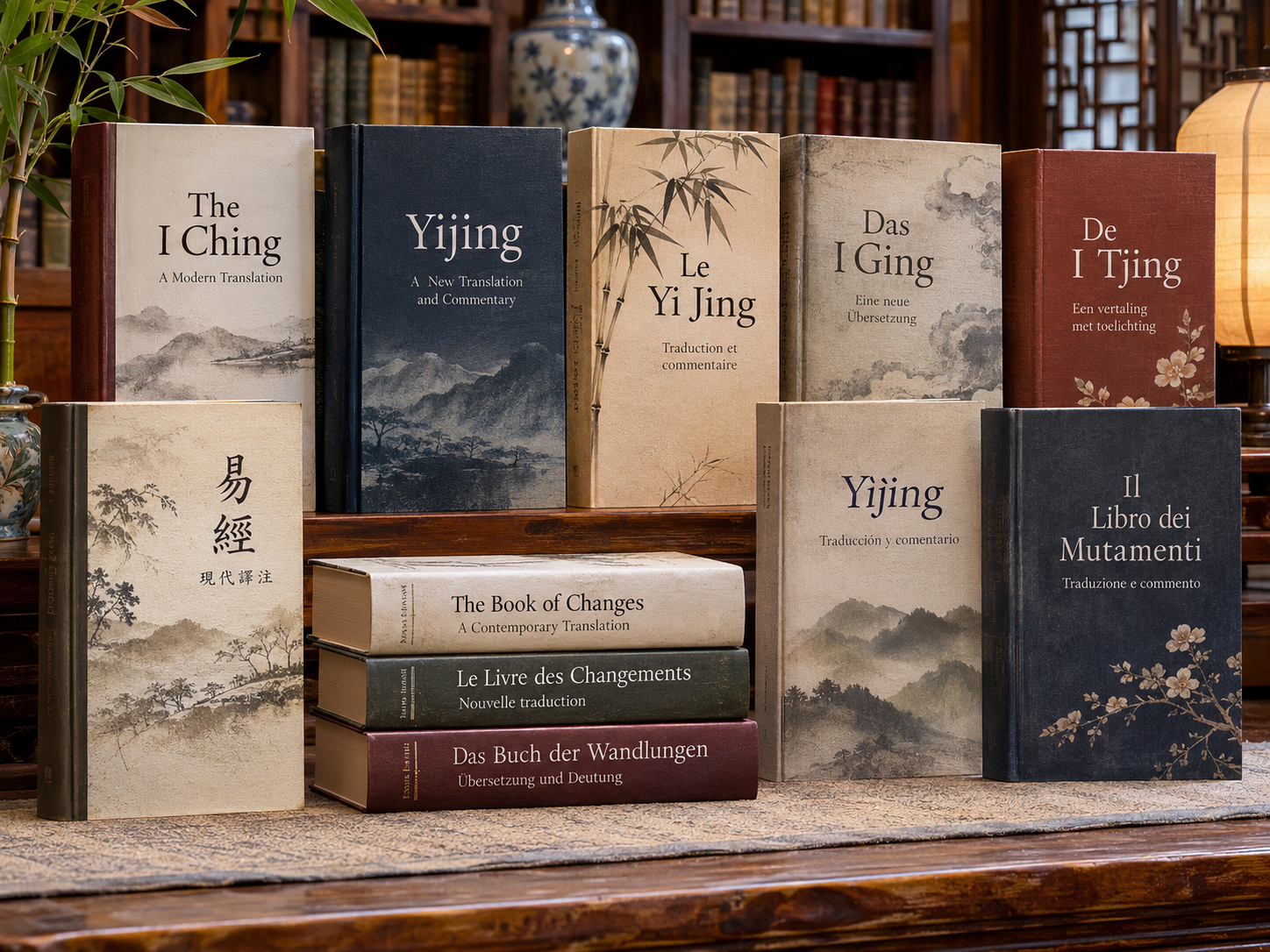
Most of us begin with a translation. Perhaps we compare several translations, consult a commentary, or look at the explanations offered by someone whose work we trust. There is nothing inherently wrong with this. Translations and commentaries can be valuable resources, especially when dealing with a text as old and complex as the Zhouyi.
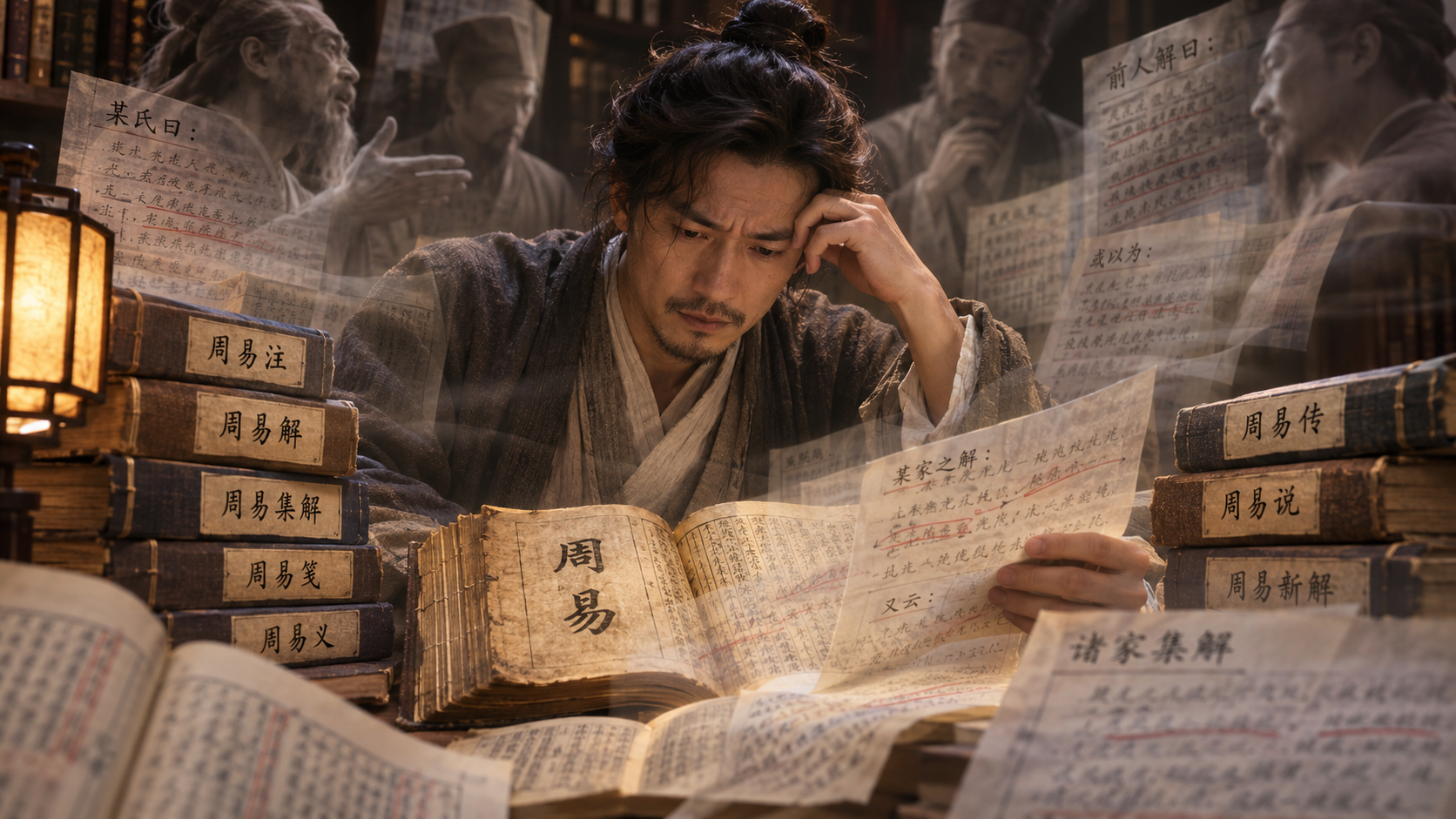
But there is a danger in relying too heavily on them. We are often so eager to find an answer to our question that we forget to examine what the text is actually showing us. Instead, we immediately try to turn its words into something meaningful for our own situation.
We look for guidance concerning our relationships, our work, our personal development, or whatever happens to occupy our minds at that moment. We want to know what the oracle is telling us about our lives, and we want to know it now. In that process, something important can easily be overlooked.
Rather than examining the original passage and trying to understand what it communicates, we may find ourselves adopting the explanations of a translator or commentator without questioning how those explanations were reached. And before we know it, we’re no longer interpreting the Zhouyi itself. We’re interpreting somebody else’s interpretation.
This is precisely why I find AI so valuable. AI encourages me to pay attention to details I might otherwise overlook. It helps me discover connections, consider alternative possibilities, and question interpretations that have become so familiar that I no longer think critically about them.
Of course, AI is a tool. Its usefulness depends on how well we understand it and how carefully we apply it. But the more we work with it, the more we learn to recognize its possibilities and appreciate its value.
Going beyond established interpretations
The same principle applies to historical and textual research.
When I study the Zhouyi, I don’t want to simply repeat what earlier translators and commentators have said. I want to understand why the text says what it says. Why does it use a particular expression rather than another? Why does it describe a particular situation? Why are certain details included, while others are left unmentioned? And what might these expressions and situations have meant to the people who originally used this oracle?
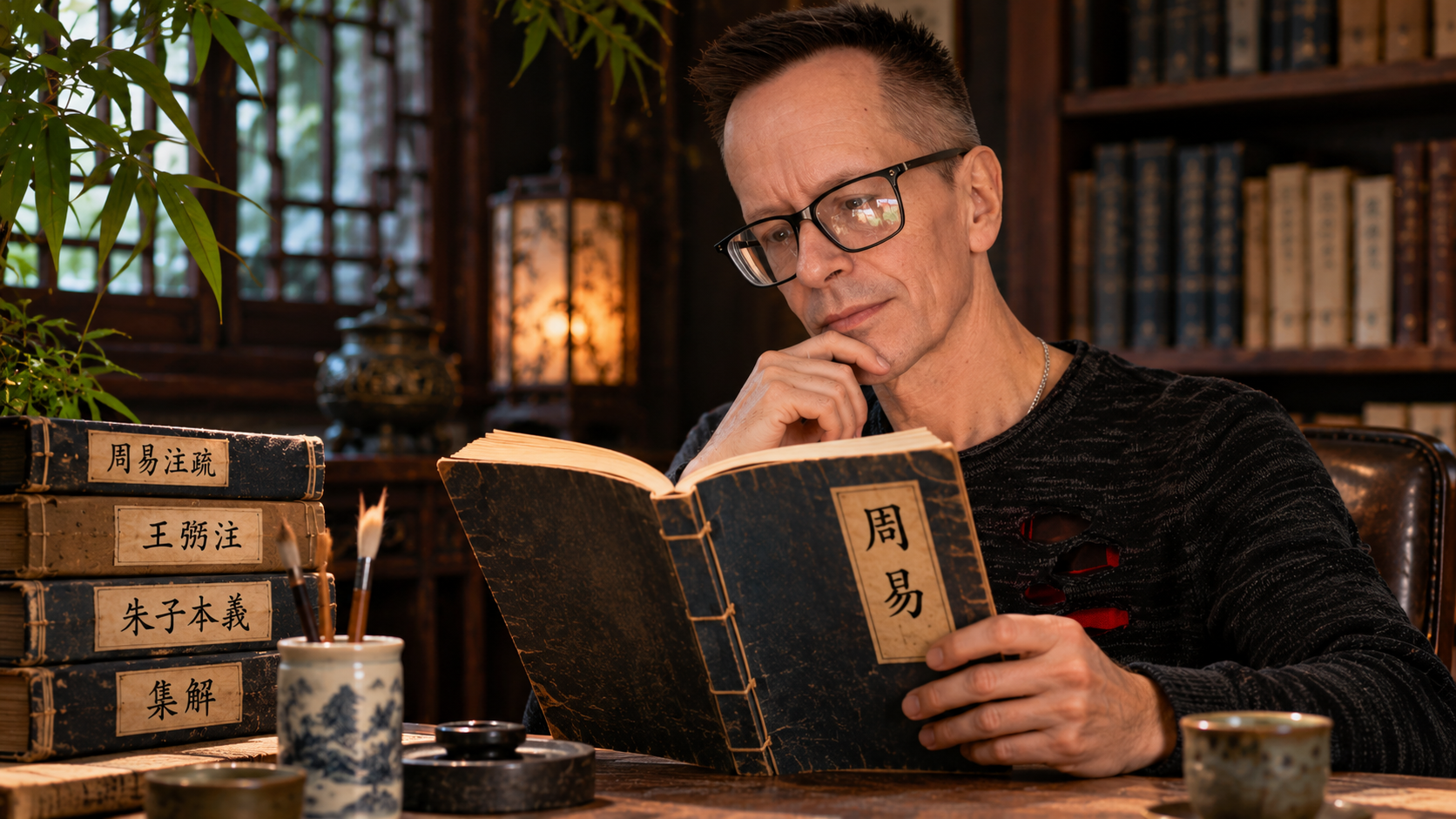
These questions are central to my research, and AI helps me explore them.
A passage that initially seems straightforward may turn out to be much more complicated when examined carefully. An apparently unimportant detail may provide a clue to its historical background, its underlying assumptions, or the circumstances it describes.
Sometimes, what appears to be a minor feature of the text turns out to be the very thing that makes the passage meaningful. This is also why I believe that the study of the Zhouyi should never be reduced to collecting interpretations and comparing their conclusions. We need to investigate how those conclusions were reached and whether they are supported by the text itself.
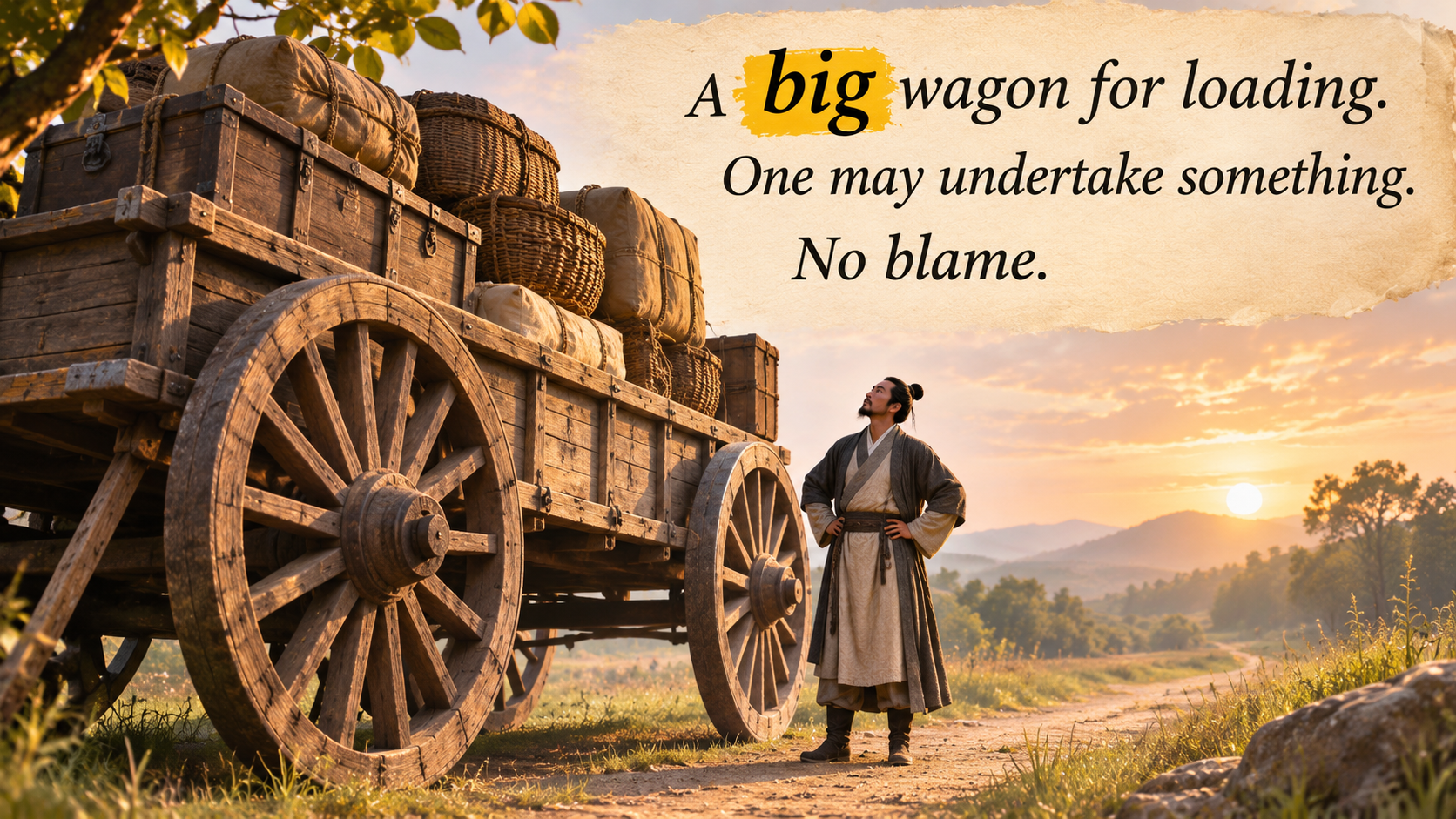
AI can play a crucial role in that process.
Getting closer to the oracle
I would argue that AI is not merely a useful addition to the interpretation of the Yijing. It is essential. Without it, we risk overlooking something fundamental, something that distinguishes the Zhouyi from so many other texts and lies at the heart of how it communicates. And the remarkable thing is that we don’t have to add anything to the text to discover the value of AI. We simply have to pay closer attention to what is already there, through the lens of AI. We need to examine the details that seem strange, the expressions that don’t immediately make sense, and the elements that are so easily overlooked, dismissed, or explained away. Instead of immediately replacing these details with familiar explanations, we should ask ourselves why they are there in the first place and what they contribute to the passage as a whole.
For me, this is one of the most rewarding aspects of working with the Zhouyi. The more carefully I examine its language, the more I discover that even seemingly insignificant details can open up entirely new ways of understanding a passage.
And that’s why AI is so important to me. It doesn’t take me away from the oracle. It brings me closer to it.
So tell me, how do you use AI in your Yijing consultations and research?
Read here how you can make a start with AI: Tips to open up your reading (tips, not rules) – 易學
Reader discussion
Comments and exchanges on this article are preserved below.